


News & Events
News & Events
201 vs 304 Stainless Steel: Key Differences in Composition
How to Distinguish 201 Stainless Steel and 304 Stainless Steel by Composition and Durability
When choosing stainless steel for construction, architectural products, outdoor equipment, or a stainless steel flagpole, understanding the difference between 201 stainless steel and 304 stainless steel is extremely important. These two grades can look very similar when they are polished or finished correctly, but their chemical composition, corrosion resistance, durability, price, and suitable applications are different.
For buyers, contractors, architects, and project owners, choosing the correct stainless steel grade can directly affect product quality, maintenance requirements, appearance, and service life.
In particular, when selecting a stainless steel flagpole, the material must be able to withstand rain, humidity, sunlight, pollution, wind, and other environmental conditions for many years.
What Is 201 Stainless Steel?
201 stainless steel is an austenitic stainless steel grade developed partly as a more economical alternative to traditional 304 stainless steel.
One of its major characteristics is the use of a higher proportion of manganese and a lower amount of nickel compared with 304. Nickel is an important alloying element that contributes to corrosion resistance and helps maintain the austenitic structure of stainless steel.
Because 201 stainless steel generally contains less nickel, its material cost can be lower. This makes it attractive for applications where the environment is relatively mild and the primary objective is cost control.
Typical applications for 201 stainless steel include indoor decorative products, furniture, kitchen-related products, architectural decoration, interior structures, and some general-purpose fabricated products.
However, its lower corrosion resistance means that it should be selected carefully for outdoor applications.
What Is 304 Stainless Steel?
304 stainless steel is one of the most widely used stainless steel grades in the world. It is commonly selected because it offers a strong combination of corrosion resistance, mechanical properties, appearance, formability, weldability, and durability.
The material contains chromium and nickel, with a typical composition of approximately 18% chromium and 8% nickel, although actual specifications can vary according to the applicable standard.
This composition provides good resistance to many common atmospheric and environmental conditions.
For this reason, 304 stainless steel is frequently used in architectural products, food-processing equipment, kitchen equipment, industrial applications, handrails, outdoor structures, decorative products, and many other applications.
For customers looking for a durable 304 stainless steel flagpole, this grade can provide a good balance between performance and cost in many normal outdoor environments.
201 vs. 304 Stainless Steel: The Main Difference
The most important difference between 201 and 304 stainless steel is their chemical composition.
201 stainless steel generally uses more manganese and less nickel, while 304 stainless steel contains a higher proportion of nickel.
This difference affects several important properties.
1. Corrosion Resistance
304 generally offers better corrosion resistance than 201.
In dry indoor environments, the difference may not always be obvious. However, when stainless steel is exposed to rain, humidity, salt, chemicals, or outdoor pollution for long periods, the difference becomes much more important.
For outdoor products such as stainless steel flagpoles, corrosion resistance should be one of the first considerations.
A flagpole remains outdoors continuously. It cannot simply be moved indoors when weather conditions become unfavorable. Therefore, material selection should reflect the actual environment where the flagpole will be installed.
2. Durability
Both 201 and 304 can provide good mechanical performance when properly manufactured. However, durability is not determined only by mechanical strength.
For outdoor products, long-term durability also depends heavily on resistance to corrosion.
A material that maintains its surface and structural integrity for a longer period can reduce maintenance requirements and help preserve the appearance of the finished product.
This is one reason 304 stainless steel is often preferred for higher-quality outdoor applications.
3. Price
One of the biggest advantages of 201 stainless steel is its relatively lower cost.
Because nickel is generally more expensive than manganese, reducing nickel content can help reduce the material price.
This makes 201 attractive for projects with strict budget requirements.
However, buyers should avoid comparing materials based solely on the initial purchase price. The total cost of ownership may include maintenance, cleaning, repair, replacement, transportation, installation, and eventual reconstruction.
A slightly more expensive material may be more economical over the entire service life of a project.
4. Appearance
When newly manufactured and polished, 201 stainless steel and 304 stainless steel can have a very similar appearance.
Both can be produced with mirror-polished, brushed, satin, or other surface finishes.
Therefore, visual inspection alone is generally not sufficient to reliably determine whether a product is 201 or 304.
This is particularly important when purchasing large quantities of stainless steel products or customized structures.
Can 201 Stainless Steel Be Used for a Flagpole?
Technically, 201 stainless steel can be used for certain applications, but it should be carefully evaluated according to the environment.
For an indoor decorative pole or a location with relatively dry and clean conditions, 201 may be a practical solution.
However, for an outdoor stainless steel flagpole, especially one exposed to rain, humidity, coastal air, industrial pollution, or other corrosive conditions, 304 or 316 stainless steel is generally a more appropriate choice.
The higher corrosion resistance can provide better long-term surface appearance and reduce the risk of corrosion-related maintenance.
For reference, customers can explore different completed applications and project examples through the stainless steel flagpole project portfolio:
Stainless Steel Flagpole Projects
304 Stainless Steel for Outdoor Flagpoles
For many normal outdoor environments, 304 stainless steel flagpoles offer a practical balance between price and performance.
They are particularly suitable for:
- Residential developments
- Commercial buildings
- Schools
- Hotels
- Offices
- Industrial facilities
- Public buildings
- Parks
- Showrooms
- Architectural projects
However, project conditions should always be considered before selecting the material.
For example, a flagpole installed in an inland urban area may experience significantly less chloride exposure than one installed close to the sea.
For a tall flagpole, structural engineering is also essential. Material grade alone does not determine whether a flagpole is safe.
Stainless Steel Grade Is Not the Only Important Factor
When buying a stainless steel flagpole, customers sometimes focus only on whether the product uses 201, 304, or 316 stainless steel.
However, several other factors are equally important.
These include tube diameter, wall thickness, flagpole height, wind load, welding quality, surface treatment, base plate, anchor bolts, internal rope system, pulley system, flag size, foundation design, and installation quality.
For example, a high-quality stainless steel grade cannot compensate for an improperly designed foundation or an undersized structure.
The manufacturing process is also important. Poor welding, iron contamination, incorrect grinding, or inappropriate surface treatment can negatively affect the appearance and corrosion resistance of stainless steel.
How Can Buyers Check 201 and 304 Stainless Steel?
A professional material certificate is one of the most useful methods for verifying stainless steel grade.
For larger construction projects, buyers should request appropriate documentation specifying the material grade and applicable standard.
Chemical analysis using specialized equipment can also distinguish between stainless steel grades more reliably than visual inspection.
Simple tests available in the market may provide indications, but they should not automatically be considered definitive proof of material grade.
For important architectural or construction projects, purchasing from an experienced manufacturer and requesting clear material specifications is a safer approach.
Should You Choose 201, 304, or 316?
The answer depends on the application.
201 stainless steel may be suitable when budget is the primary concern and the product is used in relatively mild environments.
304 stainless steel is generally a better choice when good corrosion resistance, durability, appearance, and reasonable cost are required.
316 stainless steel is typically considered when the project is exposed to more aggressive conditions, particularly chloride-rich or coastal environments.
Therefore, there is no universal answer that one grade is always the best. The correct choice depends on environmental exposure, expected service life, design requirements, maintenance conditions, and budget.
For projects requiring a specific height and configuration, customers should also compare the complete product specification rather than comparing only the price per kilogram of stainless steel.
For example, a 9-meter stainless steel flagpole requires structural considerations beyond the material grade. Detailed product and pricing information can be reviewed here:
9m Stainless Steel Flagpole Price and Specifications
For premium stainless steel solutions and customized flagpole products, additional information can be found here:
TINTA Stainless Steel Flagpole Pricing
Corrosion Resistance, and Practical Applications
The difference between 201 stainless steel and 304 stainless steel goes far beyond their purchase price.
201 stainless steel can be an economical option for suitable indoor or mild environments, while 304 provides better corrosion resistance and is widely used for demanding general-purpose applications.
For outdoor structures such as stainless steel flagpoles, 304 is often a more reliable choice when long-term appearance and corrosion resistance are important. In more aggressive coastal or chloride-rich environments, 316 stainless steel may provide an even higher level of protection.
Ultimately, selecting the correct stainless steel grade should be based on the actual installation environment, required service life, structural requirements, appearance, maintenance expectations, and total project cost.
A professional manufacturer should be able to clearly explain the material grade, dimensions, wall thickness, surface finish, structural design, accessories, and installation requirements before production begins.
Choosing the right stainless steel 201 and 304
Choosing the right stainless steel from the beginning can help ensure that the finished stainless steel flagpole remains attractive, durable, and reliable throughout its service life. 201 stainless steel vs 304 stainless steel, 201 vs 304 stainless steel, difference between 201 and 304 stainless steel, 201 stainless steel, 304 stainless steel, 201 stainless steel composition, 304 stainless steel composition, 201 stainless steel corrosion resistance.
304 stainless steel corrosion resistance, 201 vs 304 durability, 201 vs 304 price, 304 stainless steel flagpole, 201 stainless steel flagpole, stainless steel flagpole, stainless steel flag pole, best stainless steel for flagpole, stainless steel flagpole outdoor, 304 stainless steel outdoor use, 201 stainless steel outdoor use, stainless steel flagpole manufacturer.
Processing stainless steel products as required - Other news ...
Products
inox - Featured Products









STAINLESS STEEL HOT NEWS

A Historic Parade: 50 Years of Southern Liberation with TinTa Flagpoles

What is a 360-degree rotating stainless steel flagpoles
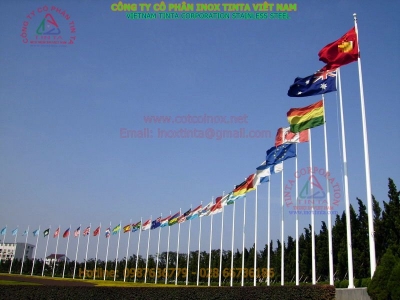
We would like to introduce to readers about stainless steel flagpoles
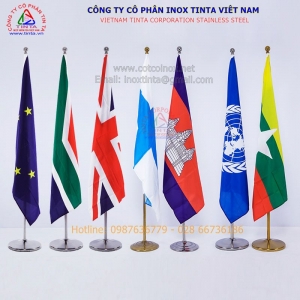
Install an office flagpole in a diplomatic meeting
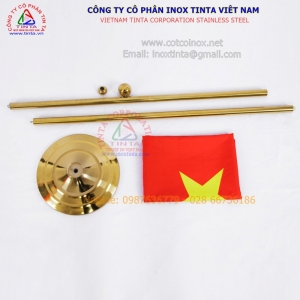
Flagpole office good meeting place it is so important
tinta's Customer support
Mr Hoang Thai (Vietnam/English)
Ms Thùy Dung (Vietnam / English)
Hoàng Gia Phú (Mr)
Mr Viết Sáu (Vietnam/English)